
Industrial Transformer Procurement Guide: Types, Specs, and Cost Analysis
Jun 26,2026 | nretec
An In-Depth Look at What Are the Types of Transformers and Their Uses for Industrial Buyers
Introduction: Why Your Transformer Choice Directly Impacts Your Bottom Line
When engineering hands you a spec sheet for an "800kVA, 10kV/0.4kV transformer," your task goes beyond just matching numbers. The right choice can boost operational efficiency for decades; the wrong one can lead to excessive energy costs and critical safety failures. One real-world example: a manufacturing plant chose aluminum windings over copper to save on initial costs, only to discover their energy consumption was 15% higher, costing them thousands in the long run.
This guide is designed for procurement professionals. We'll skip the complex physics and focus on a six-step framework that translates technical specifications into business value, empowering you to make a procurement decision that stands up to scrutiny.
Step 1: Define the Core Function - Voltage Transformation
At its core, a transformer performs voltage transformation—it modifies AC voltage to match the requirements of the grid and your equipment.
1. Step-Down Transformer
A step down transformer is the most common type in factory settings. It takes high voltage from the grid and reduces it to a usable level for machinery.
- Function: Reduces a high input voltage (e.g., 10kV) to a lower, usable industrial voltage (e.g., 380V).
- Key Specs:
- Power Rating: 50 kVA to 2500 kVA for industrial distribution.
- Voltage Level: Primary winding typically at 10 kV or 35 kV; secondary at 400 V.
- Standards: Must comply with IEC 60076 or IEEE C57.12.
2. Step-Up Transformer
- Function: Increases a lower input voltage to a higher output voltage.
- Key Specs:
- Power Rating: Varies from hundreds of kVA to multiple MVA.
- Voltage Level: Primary side matches the power source (e.g., 400 V from solar panels); secondary matches the grid (e.g., 10 kV).
- Application: Primarily for power generation (e.g., factory cogeneration, solar farms) to send electricity to the grid.
3. Isolation Transformers
Isolation transformers act as a safety buffer, electrically separating circuits without changing the voltage.
- Function: Creates electrical separation between the primary and secondary circuits to enhance safety and suppress electrical noise.
- Key Specs:
- Turns Ratio: Strictly 1:1, with equal primary and secondary windings.
- Insulation: High insulation resistance is the key performance metric.
- Application: Essential for protecting sensitive electronic devices like PLCs, medical equipment, and precision instruments from power fluctuations.
⚡ Key Takeaways for Step 1: Your first task is to confirm the transformer's core function from the technical specs: stepping down power for use (most common), stepping up power for generation, or isolating for safety.
Step 2: Choose Insulation Based on Environment (Dry Type vs. Oil Immersed Transformer)
This is a critical decision point that impacts safety, maintenance, and location. In North America, for example, over 95% of new indoor installations for data centers and commercial buildings now specify dry type transformers due to fire safety regulations.
Procurement Decision Matrix: Dry-Type vs. Oil-Immersed
| Feature | Dry-Type Transformer | Oil-Immersed Transformer |
|---|---|---|
| Installation Site | Indoor preferred: Ideal for workshops, buildings, data centers. | Outdoor preferred: Best for substations and open areas. |
| Safety | High: No flammable liquids, eliminating fire and leak risks. | Standard: Oil is combustible and requires fire suppression and containment infrastructure. |
| Maintenance | Simple: Requires only periodic cleaning. | Complex: Needs regular oil level and quality checks. |
| Initial Cost | Higher | Lower |
| Footprint | More compact unit, but requires more ventilation clearance. | Smaller unit clearance, but requires a larger total footprint for containment basins. |
⚡ Key Takeaways for Step 2: For indoor applications or anywhere fire safety and low maintenance are priorities, dry-type transformers are the modern standard. Oil-immersed units remain a cost-effective solution for outdoor, high-capacity substations. For more details, see our Dry Type Transformer Product Page.
Step 3: Analyze Core Material for Performance and Cost
The transformer's core material dictates its efficiency and price point.
1. Iron Core (Silicon Steel)
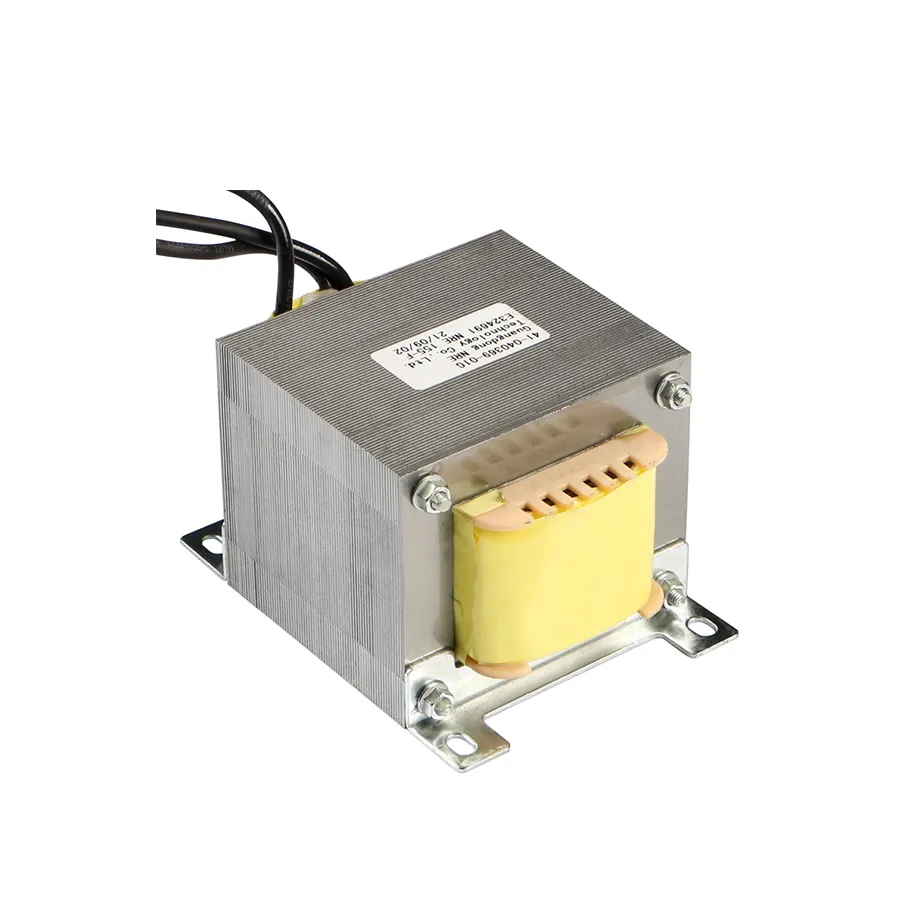
Positioning: The industry workhorse. This is the standard core material for nearly all power transformers and distribution transformers.
Applications: It's the default choice for the dry-type and oil-immersed transformers that power your entire facility. Its purpose is to provide an efficient path for the magnetic flux.
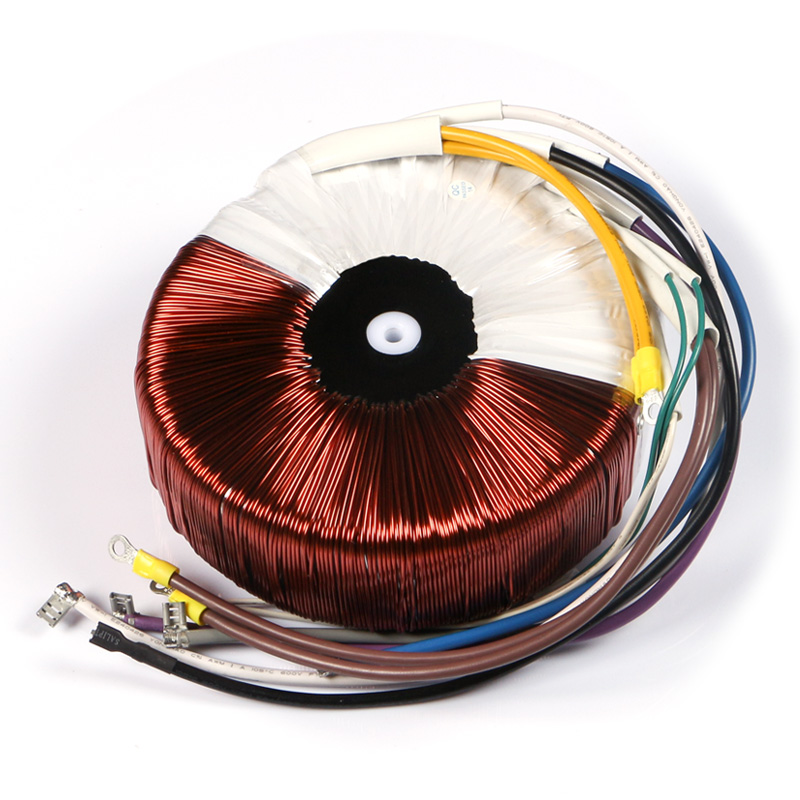
2. Toroidal Core Transformer
Positioning: The high-performance specialist for sensitive applications.
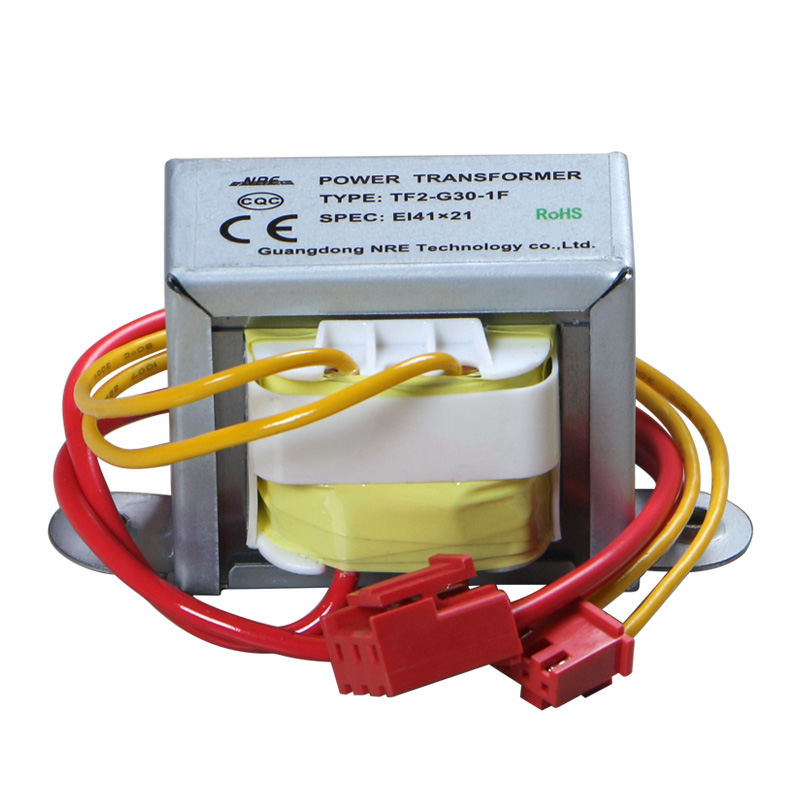
Expert Insight: Our experience producing over 6 million toroidal core transformer units annually shows that their failure rate in medical device applications is up to 70% lower than traditional E-I core transformers due to superior heat dissipation and lower operational stress.
Applications:
- Medical & Lab Equipment: Where low electromagnetic interference is critical.
- High-Fidelity Audio: Eliminates "hum" for pure signal integrity.
- Compact Electronics: Where size and efficiency are paramount.
3. Ferrite Core Transformer
Positioning: The specialist for high-frequency electronics.
Applications: A ferrite core transformer is not used for general power distribution. It's found inside electronic devices like Switched-Mode Power Supplies (SMPS), VFDs, and welding machines that operate at high frequencies.
⚡ Key Takeaways for Step 3: For standard factory power, the iron core transformer is your choice. If the transformer is for a specific piece of sensitive electronic or medical equipment, verify if a toroidal core transformer is specified for its high efficiency and low noise.
👉 Need help selecting the right transformer core for a custom application? Contact our experts.
Step 4: Confirm the Power Phase: Three-Phase vs. Single-Phase
- Three-Phase Transformers: The standard for industrial power. Your factory's main power distribution system and large machinery run on three-phase power.
- Single-Phase Transformers: Used for smaller, specific applications like lighting circuits, control panels, and powering auxiliary equipment.
Step 5: Make the Commercial Decision: Copper vs. Aluminum Windings
This is a key decision in any power transformer selection guide, directly impacting the Total Cost of Ownership (TCO).
Copper vs. Aluminum Transformer Efficiency
| Winding Material | Copper Windings | Aluminum Windings |
|---|---|---|
| Initial Cost | Higher | Lower |
| Efficiency | Higher. Lower electrical resistance means less energy lost as heat. | Lower. Higher resistance leads to greater energy losses over time. |
| Lifespan | Longer. More resistant to oxidation and thermal stress. | Shorter. More susceptible to corrosion and connection issues if not properly installed. |
| Size | More compact for the same power rating. | Larger and heavier for the same power rating. |
Expert Insight: Based on our 30 years of experience, we advise that for any critical load or transformers operating above 75% capacity, copper windings provide a return on the initial investment within 3-5 years through energy savings alone.
Step 6: Putting It All Together - How to Read a Transformer Nameplate
The nameplate connects all our decision points into a single summary.
(Image Suggestion: A clear photo of a real transformer nameplate with annotations pointing to each key spec. ALT Tag: "Reading an Industrial Transformer Nameplate with kVA and Voltage Specs")
- Model: SCB10-800/10 → Tells you it's a Dry-Type Cast Resin transformer.
- Capacity: 800 kVA → The transformer's maximum power rating.
- Voltage: 10kV / 0.4 kV → It's a Step-Down transformer.
- Phase: 3 → It's a Three-Phase unit.
- Vector Group: Dyn11 → The winding configuration, a key technical spec.
- Insulation Class: F → Specifies the thermal rating of the insulation.
Frequently Asked Questions (FAQ)
What is the most common transformer for factories?
The most common type is a three-phase, step-down distribution transformer. It is typically an iron core transformer and can be either dry-type (for indoors) or oil-immersed (for outdoors).
Which is better for indoor use, a dry-type or oil-immersed transformer?
Dry-type transformers are overwhelmingly preferred for indoor installations due to their high fire safety, lack of oil leaks, and lower maintenance requirements.
How do you read a transformer nameplate?
The nameplate provides key data: kVA (power capacity), primary and secondary voltage (its function), number of phases, insulation type, and cooling method. This information allows you to verify it matches your engineering requirements.
Conclusion: Making an Informed Procurement Decision
Choosing a transformer is not just a purchase; it's a long-term investment in your facility's efficiency and safety. By following this six-step guide, you can move beyond simply matching a part number and make a strategic decision that optimizes the Total Cost of Ownership.
Final Procurement Checklist:
- Function: Is it step-down, step-up, or isolation?
- Environment: Is a dry-type or oil-immersed unit required?
- Performance: Does the application require a standard iron core or a high-performance toroidal core?
- Phase: Is it three-phase or single-phase?
- TCO: Is copper or aluminum the better long-term financial choice?
- Supplier: Does the supplier have the certifications, experience, and capacity to deliver a reliable product on time?
About NRE Technology: Your Partner in Reliable Power
This guide is provided by GUANGDONG NRE Technology Co., Ltd. Since 1994, we have specialized in the R&D and manufacturing of high-reliability transformers. We are a trusted partner to global brands like GE, Paulmann, and EGLO, a testament to our quality and service.
Our 82,700m² facility, staffed by over 2,000 professionals including 200 engineers, has the capacity to produce 6 million toroidal transformers and 30 million EI transformers annually. All our products are certified by CQC, TUV, VDE, UL, SGS, and CE, ensuring they meet the highest international safety and quality standards. See how we've helped companies like yours by exploring our case studies.
For technical consultation or detailed product specifications, contact our expert team today.
Comment