
Key Takeaways
- Toroidal power transformers use a donut-shaped core that provides 90-98% efficiency, significantly higher than traditional EI transformers (typically below 90%)
- They are 50% smaller and lighter than equivalent conventional transformers, making them ideal for space-constrained applications
- The closed-loop core design reduces electromagnetic interference (EMI) by up to 8 times compared to laminated transformers
- Low noise operation (virtually hum-free) makes them perfect for audio equipment, medical devices, and precision instruments
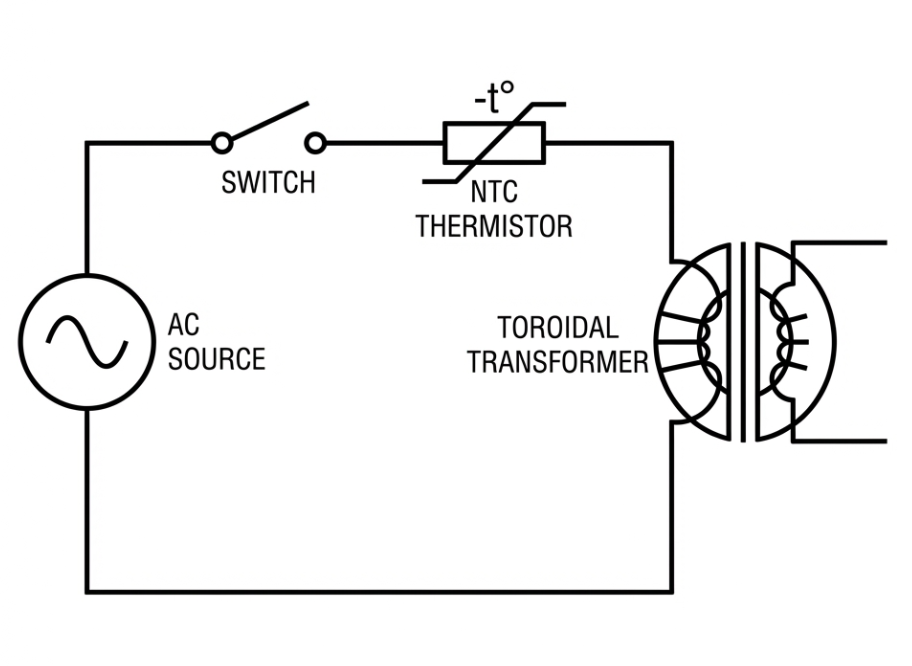
- Inrush current is a key consideration—solutions include slow-blow fuses, soft start circuits, or NTC thermistors
What is a Toroidal Power Transformer?
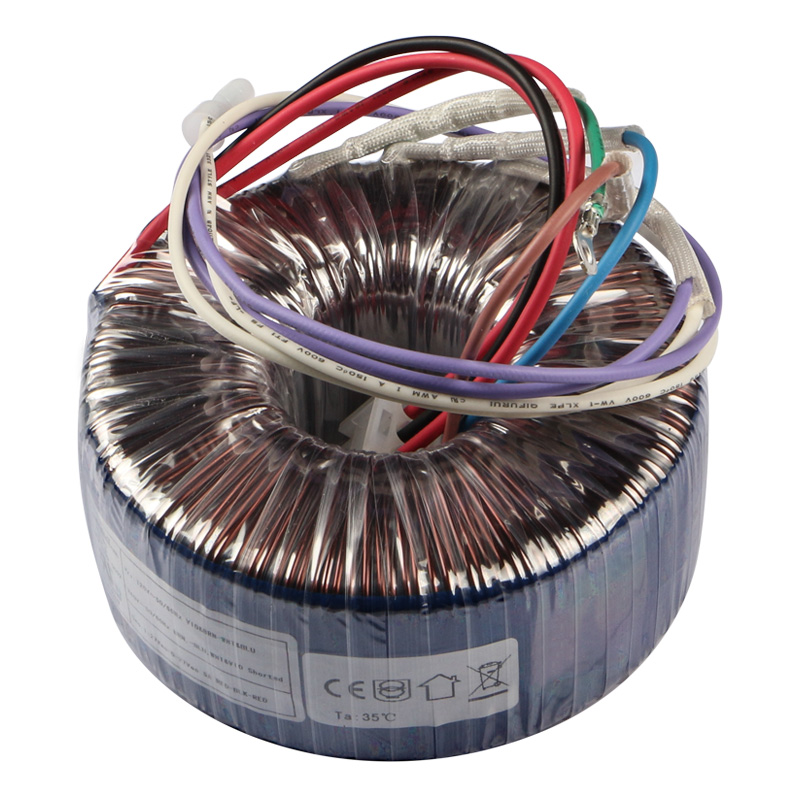
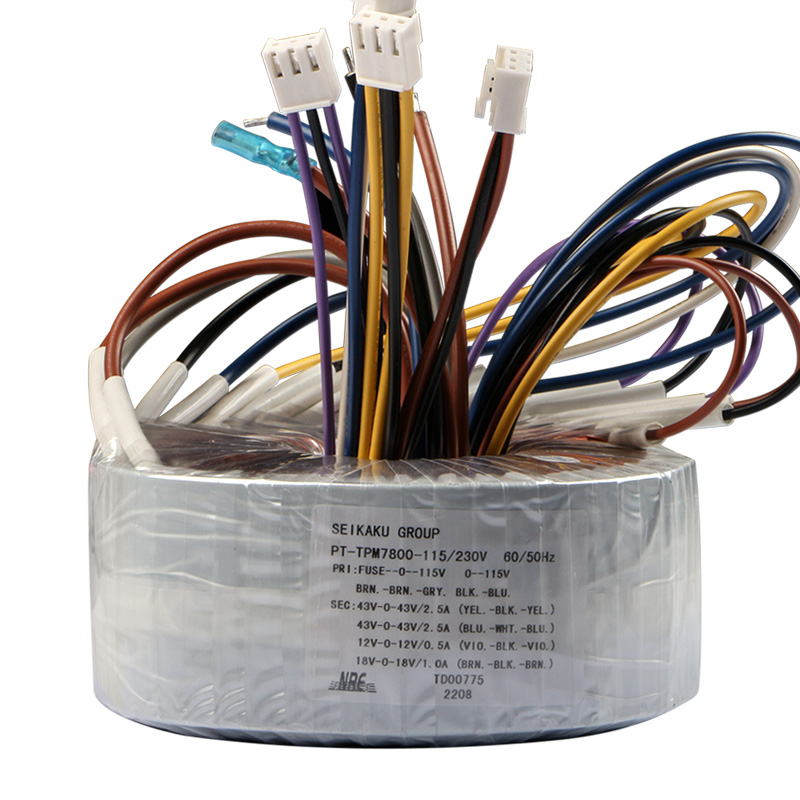
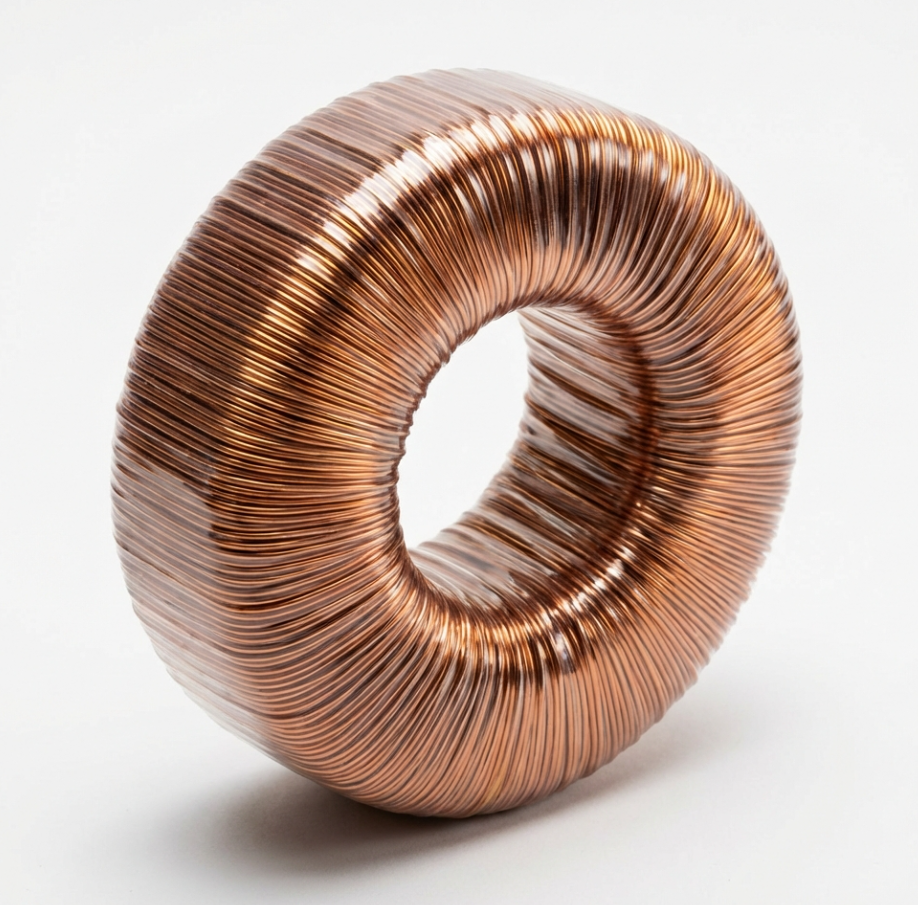
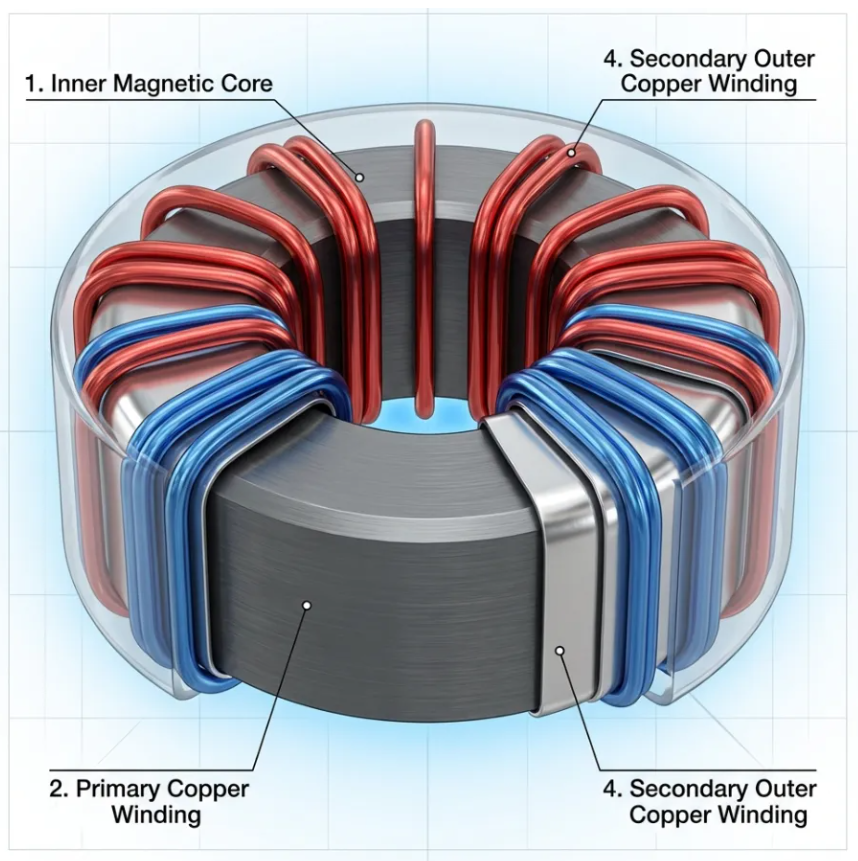
A toroidal power transformer is a specialized electrical transformer with a distinctive ring-shaped (donut or torus) magnetic core. Unlike traditional EI-core transformers that use stacked laminations, toroidal transformers feature a continuous strip of grain-oriented silicon steel wound tightly into a ring, with primary and secondary windings distributed evenly around the entire circumference.
The word "toroidal" comes from "torus," the mathematical term for a donut shape. In some regions, you may also hear these called:
- Trafo Toroidale (Italian/European terminology)
- Ring core transformers
- Donut transformers (informal)
Why the Donut Shape Matters
Imagine running on a circular track versus a rectangular one—the circular path is more efficient with no corners to slow you down. The same principle applies to magnetic flux in a toroidal transformer. The ring shape creates a closed magnetic circuit with no air gaps, allowing the magnetic field to flow smoothly and efficiently through the core material.
This elegant geometry results in:
- Shorter wire lengths (reducing resistive losses)
- Higher flux densities (up to 16.5 kilo-gauss, 40% higher than EI cores)
- Complete containment of magnetic fields within the core
- Minimal energy waste as heat
How Toroidal Power Transformers Work
The Electromagnetic Induction Principle
All transformers operate on the principle of electromagnetic induction, discovered by Michael Faraday in 1831. Here's how it works in a toroidal transformer:
- AC Input: Alternating current (AC) is applied to the primary winding, which is wrapped around the toroidal core
- Magnetic Field Creation: The current creates a fluctuating magnetic field that builds and collapses with each AC cycle (50 or 60 times per second)
- Flux Containment: The toroidal core efficiently channels this magnetic flux in a continuous loop
- Voltage Induction: The changing magnetic field passes through the secondary winding, inducing a voltage through electromagnetic induction
- Power Transfer: Energy is transferred from primary to secondary without the windings being electrically connected
The Voltage Transformation Formula
The relationship between primary and secondary voltages is determined by the turns ratio:
Vp / Vs = Np / Ns

Where:
Vp = Primary voltage
Vs = Secondary voltage
Np = Number of primary turns
Ns = Number of secondary turns
For example, a transformer with a 2:1 turns ratio will step down 240V to 120V.
Faraday's Equation for Induced Voltage
ERMS = 4.44 × N × Ac × f × B × 10⁻⁸

Where:
N = Number of turns
Ac = Core cross-section area (cm²)
f = Frequency (Hz)
B = Flux density (gauss)
Toroidal transformers can operate at flux densities up to 16.5 kilo-gauss, approximately 40% higher than conventional laminated transformers. This higher flux density allows fewer copper turns, reducing winding resistance and improving overall efficiency.
Toroidal vs EI Transformer: Complete Comparison
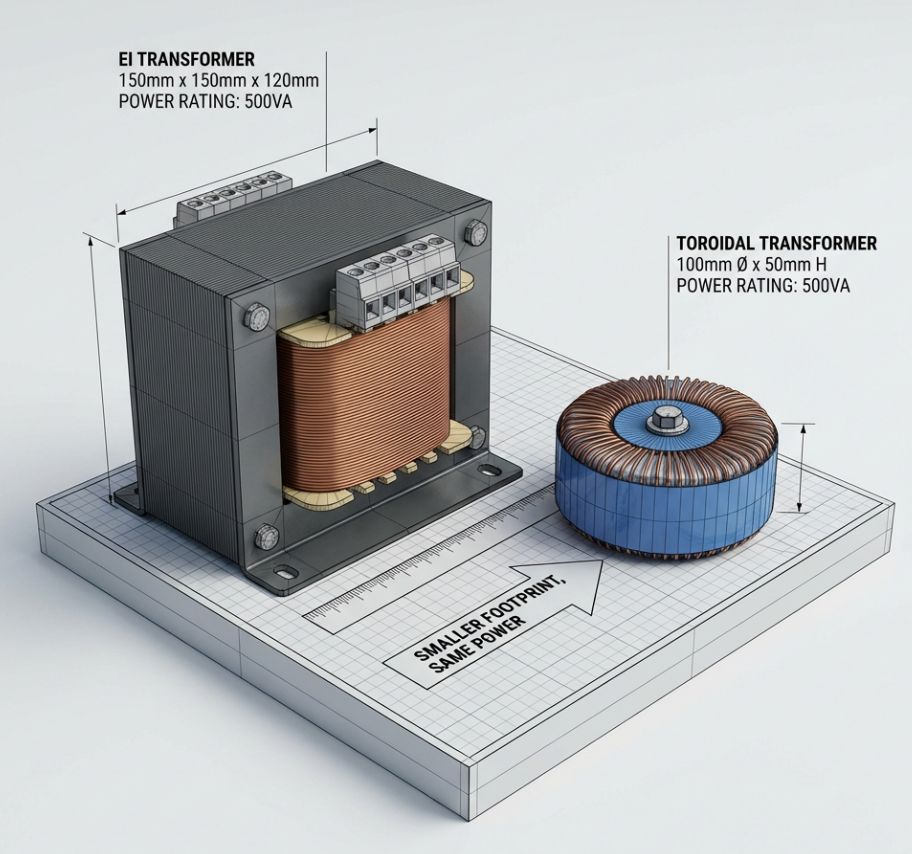
Understanding the differences between toroidal and EI (laminated) transformers helps you choose the right option for your application.
Side-by-Side Comparison Table
| Feature | Toroidal Transformer | EI-Core Transformer |
|---|---|---|
| Core Design | Continuous ring, no air gaps | Stacked E and I shaped laminations with air gaps |
| Efficiency | 90-98% (varies by power rating) | Typically below 90% |
| Size | 50% smaller | Larger footprint |
| Weight | 50% lighter | Heavier |
| EMI/Stray Fields | 8x lower, self-shielding | Higher, may need external shielding |
| Audible Noise | Virtually silent | Noticeable hum from loose laminations |
| Magnetizing Current | Only 10% of EI transformers | 10x higher |
| No-Load Power | 1/16th of EI transformers | Higher standby consumption |
| Manufacturing Cost | Higher (complex winding) | Lower (simpler assembly) |
| Inrush Current | Higher (up to 15x rated) | Lower |
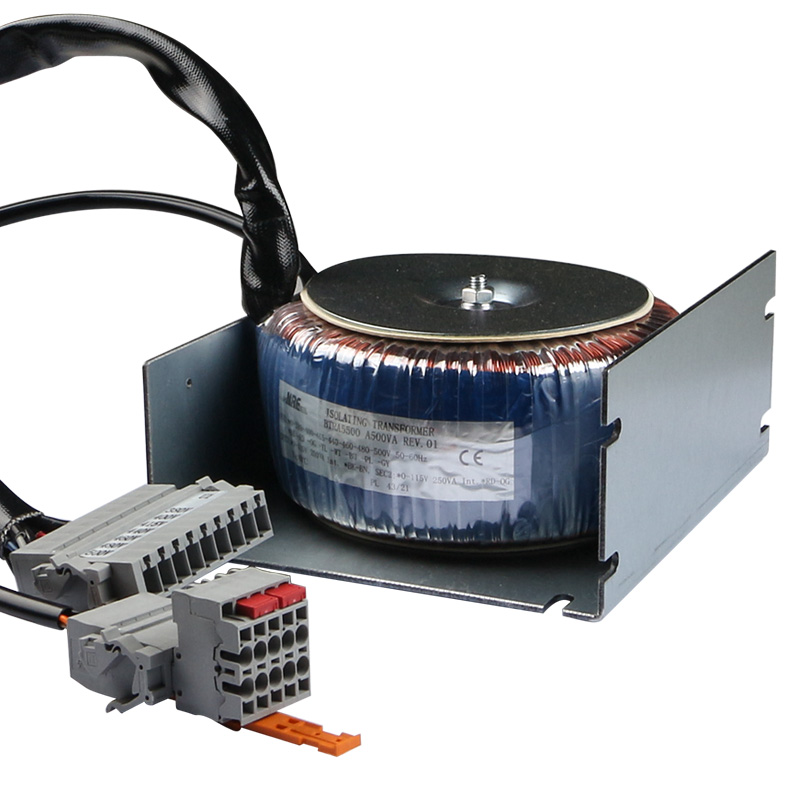
| Mounting | Single center bolt | Multiple mounting points |
When to Choose Toroidal
✅ Best applications for toroidal transformers:
- Audio and hi-fi equipment (low noise critical)
- Medical devices (low EMI and leakage current required)
- Sensitive electronic equipment (computers, inverters)
- Space-constrained designs
- Battery-operated or portable devices
- Applications requiring high efficiency
- Environments where noise is unacceptable
When EI May Be Better
✅ Consider EI transformers when:
- Budget is the primary concern
- Power requirements exceed 5kVA
- Easy field repair/rewinding is needed
- Industrial environments with potential mechanical stress
- Applications where inrush current is problematic
Key Advantages of Toroidal Power Transformers
1. Superior Efficiency (90-98%)
Toroidal transformers achieve exceptional efficiency due to their optimized magnetic circuit:
| Power Rating (VA) | Typical Efficiency | Notes |
|---|---|---|
| 3-20 VA | ~80% | Low power designs have inherent constraints |
| 50-200 VA | 90-94% | Good efficiency range |
| 200-500 VA | 94-96% | Optimal performance begins |
| 500-1000 VA | 96-97% | High efficiency zone |
| 1000+ VA | 97-98% | Peak efficiency at half rated load |
Key insight: Toroidal transformers operate most efficiently at approximately 50% of rated load. This is important for sizing—select a transformer rated at roughly twice your expected average load for optimal efficiency.
2. Dramatic Size and Weight Reduction
Compared to equivalent EI transformers:
- Volume savings: Up to 50-64%
- Weight savings: Up to 50%
This reduction comes from:
- Higher operating flux densities (fewer turns needed)
- 100% of core utilized for winding (no unused core sections)
- Symmetrical winding distribution around entire circumference
Practical example: A 500VA toroidal transformer might measure Ø120mm × 50mm, while an equivalent EI transformer could be 150mm × 130mm × 70mm.
3. Extremely Low EMI (8x Reduction)
The toroidal shape provides natural electromagnetic shielding:
- No air gaps means no flux leakage points
- Uniform winding distribution cancels stray magnetic fields
- Closed magnetic circuit contains virtually all flux within the core
- 85-95% lower stray field compared to laminated transformers
For additional shielding, options include:
- GOSS band (grain-oriented silicon steel) around circumference
- Metal belly band enclosure
- Full steel housing containment
4. Virtually Silent Operation
Laminated transformers produce audible hum due to:
- Vibrating loose laminations
- Air gaps causing magnetic discontinuities
- Magnetostriction effects
Toroidal transformers eliminate these issues:
- Single continuous steel strip—no loose parts
- Tight copper windings dampen vibration
- No air gaps = no hum source
- 8:1 reduction in audible noise vs EI transformers
Noise levels by power rating:
| Power Rating (kVA) | Typical Noise Level (dB) |
|---|---|
| 0.045-0.5 | 56 |
| 0.5-1.0 | 58 |
| 1.0-2.0 | 61 |
| 2.0-3.0 | 63 |
| 3.0-5.0 | 65 |
5. Excellent Temperature Performance
Lower losses mean cooler operation:
- Core losses: Only 10-20% of total losses (vs 50% in EI)
- Iron losses: ~1.1 W/kg at 1.7 Tesla and 50Hz
- Temperature rise: Designed between 25°C and 55°C
- Longer component lifespan due to reduced thermal stress
6. Flexible Mounting Options
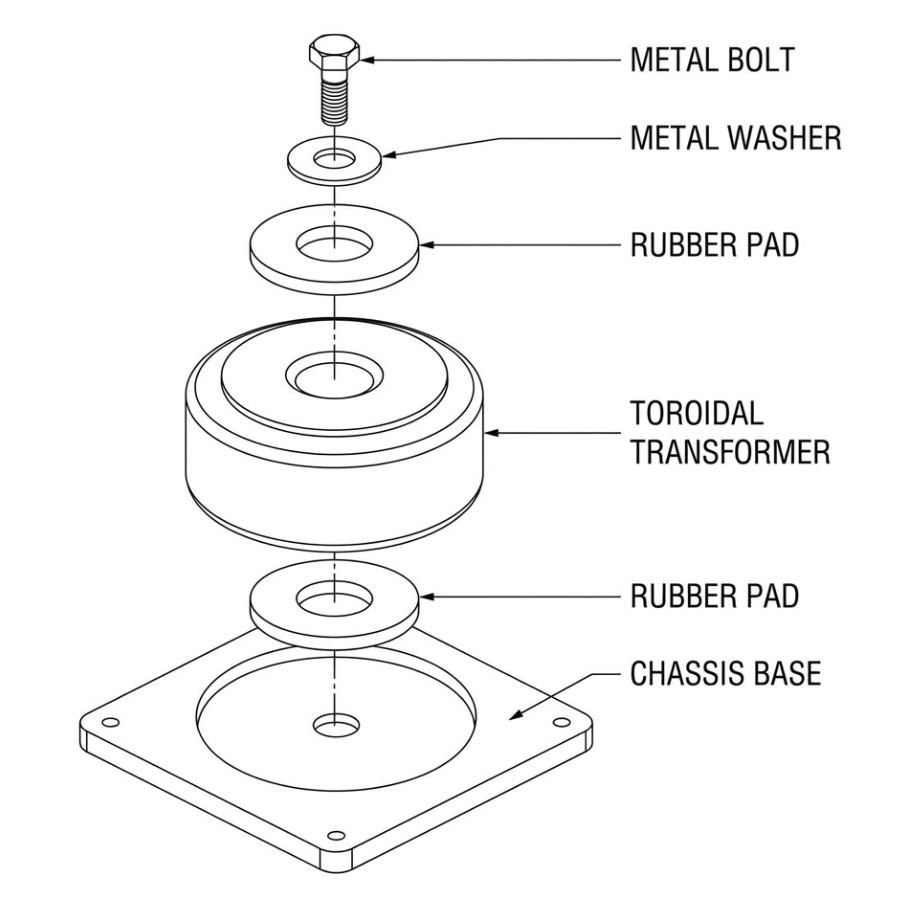
Toroidal transformers offer versatile installation:
| Mounting Method | Description | Best For |
|---|---|---|
| Single center bolt | Bolt through core with metal washer and rubber pads | Standard applications up to 1000VA |
| Resin potted center | Epoxy-filled core with brass inserts | High vibration environments |
| PCB mounting | Through-hole pins directly to circuit board | Small transformers, PCB integration |
| DIN rail clips | Standard 35mm DIN rail mounting | Control panels, industrial |
| Encapsulated housing | Complete plastic or metal enclosure | Harsh environments |
Challenges and Solutions
The Inrush Current Problem
What is it? When power is first applied, toroidal transformers can draw inrush currents 10-15 times higher than steady-state current. This happens because:
- No air gaps = lower core reluctance
- Higher residual flux (remanence) when power is removed
- Core can saturate during initial energization
Duration: Usually less than half a cycle (<10ms)
Consequences if unaddressed:
- Blown fuses
- Tripped circuit breakers
- False fault indicators
Inrush Current Solutions
| Solution | Description | Best For |
|---|---|---|
| Slow-blow fuses | Time-delayed fuses that tolerate brief overcurrent | Simple, low-cost applications |
| Time-delayed circuit breakers | Breakers with intentional delay | Industrial installations |
| NTC Thermistor | Negative temperature coefficient resistor in series with primary | Cost-effective, self-resetting |
| Soft-start circuit | Resistor network that ramps up voltage gradually | High-performance applications |
| Zero-crossing switch | Energizes transformer at zero-voltage point in AC cycle | Premium equipment |
💡 NRE Tip: Our engineering team can design transformers with optimized inrush characteristics for your specific application. Contact us to discuss your requirements.
Core Materials and Construction
Common Core Materials
| Material | Properties | Applications |
|---|---|---|
| Grain-oriented silicon steel | Highest permeability, low losses | Standard power transformers (most common) |
| Amorphous steel | Very low core losses, non-crystalline structure | High-efficiency, green energy systems |
| Ferrite | High frequency operation, good insulation | Higher frequencies (>1kHz), SMPS |
| Powdered iron | Good permeability, moderate losses | Medium frequency, cost-sensitive |
Standard Dimensions
Toroidal transformer dimensions can be customized, but typical diameter-to-height ratios include:
- 3:1 - Standard profile (most common)
- 2:1 - High profile (taller, smaller diameter)
- 7:1 - Low profile (pancake shape, larger diameter)
Applications
Audio Equipment
Toroidal transformers are the gold standard for high-fidelity audio:
- Why they're preferred: Ultra-low EMI prevents interference with sensitive amplifier circuits
- Noise performance: Virtually silent operation eliminates transformer hum in recordings
- Power delivery: Clean, stable power for dynamic music reproduction
- Applications: Amplifiers, preamplifiers, mixing consoles, studio monitors, home theater systems
"The difference a high-quality toroidal transformer makes to amplifier performance is immediately audible—cleaner bass, better dynamics, and complete absence of hum."
Learn more: What is the Role of an Audio Amplifier Power Transformer?
Medical Devices
Medical equipment demands the highest safety and reliability standards:
Safety Features for Medical Applications:
| Safety Requirement | How Toroidal Transformers Meet It |
|---|---|
| Galvanic isolation | Complete electrical separation between windings |
| Low leakage current | Minimal capacitive coupling, meets IEC 60601-1 |
| Temperature control | Low losses keep temperature rise manageable |
| Clearance/Creepage | Designed to meet safety spacing requirements |
| Hi-Pot testing | 4000VAC RMS between primary and secondary |
Certifications: UL 60601-1, IEC 60601-1, CSA C22.2
Typical medical applications: ECG monitors, ventilators, MRI equipment, diagnostic instruments, patient monitors
Industrial Power Supplies
For industrial applications requiring reliable power conversion:
- High efficiency reduces electricity costs
- Compact size fits dense control panels
- Low EMI prevents interference with sensitive PLCs and sensors
- Thermal stability for continuous operation
Applications: CNC machines, automation systems, inverters, UPS systems, welding equipment
Related: Advantages and Disadvantages of Toroidal Transformers in Inverters
Renewable Energy Systems
The renewable energy sector increasingly relies on toroidal transformers:
- Solar inverters: High efficiency for maximum energy harvest
- Wind power systems: Reliable operation in variable conditions
- Energy storage systems: Bidirectional power flow capability
- Electric vehicle chargers: Compact, efficient power conversion
Consumer Electronics
Everyday devices benefit from toroidal transformer advantages:
- Televisions and monitors
- Computer power supplies
- Home audio systems
- Gaming consoles
- Smart home devices
Safety Certifications
Available Certifications
| Certification | Description | Region |
|---|---|---|
| UL | Underwriters Laboratories | North America |
| CSA | Canadian Standards Association | Canada |
| CE | Conformité Européenne | European Union |
| VDE | Verband Deutscher Elektrotechniker | Germany |
| IEC 60601-1 | Medical electrical equipment safety | International |
| RoHS | Restriction of Hazardous Substances | EU (environmental) |
Why Choose NRE for Your Toroidal Transformer Needs
30+ Years of Manufacturing Excellence
NRE has been designing and manufacturing high-quality toroidal transformers for over three decades. Our expertise includes:
- Custom design capability: From 50VA to 5000VA
- Full certification support: UL, CE, IEC 60601-1
- Flexible production: Low MOQ available for prototypes
- Quality assurance: ISO certified manufacturing facility
- Fast turnaround: Quote within 24 hours
Our Manufacturing Advantage
- In-house core winding and annealing
- Precision winding equipment for consistent quality
- 100% electrical testing before shipment
- Temperature rise testing per IEC standards
- Hi-Pot testing for safety compliance
Browse our product range: Toroidal Transformers | EI Transformers | Audio Transformers
Frequently Asked Questions
What makes a toroidal transformer different from a regular transformer?
A toroidal transformer has a ring-shaped core instead of the rectangular EI-shaped core found in conventional transformers. This shape keeps the magnetic field contained within the core, resulting in higher efficiency, lower noise, and reduced electromagnetic interference.
Can a toroidal transformer reduce electrical noise in audio equipment?
Yes, significantly. The closed core design and tight windings block stray magnetic fields, reducing hum and noise by up to 8 times compared to EI transformers. This is why toroidal transformers are the preferred choice for high-fidelity audio equipment.
Are toroidal transformers safe for medical devices?
Yes. With proper design, toroidal transformers meet the stringent requirements of IEC 60601-1 for medical electrical equipment. Features include strong insulation, low leakage current, and appropriate clearance/creepage distances.
How should I mount a toroidal transformer?
Most toroidal transformers use a single bolt through the center hole for mounting. Use a metal centering washer and soft rubber pads to secure the transformer while dampening vibration. Never over-tighten the mounting bolt, and ensure the bolt doesn't create a shorted turn.
Why does my toroidal transformer sometimes trip the circuit breaker on startup?
This is due to inrush current—toroidal transformers can draw 10-15x rated current for a brief moment when first energized. Solutions include using slow-blow fuses, time-delayed circuit breakers, NTC thermistors, or soft-start circuits.
What is the typical lifespan of a toroidal transformer?
With proper thermal management, a well-designed toroidal transformer can last 20-30 years or more. The low operating temperature and minimal mechanical stress contribute to exceptional longevity.
Can I order custom specifications?
Absolutely. NRE specializes in custom toroidal transformer design. We can accommodate specific voltage requirements, mounting configurations, lead lengths, and certifications. Contact our engineering team for custom solutions.
What's the difference between 50Hz and 60Hz transformers?
A 60Hz transformer can be 20% smaller than an equivalent 50/60Hz universal design. If your application uses only 60Hz mains power, you can specify a smaller, more cost-effective transformer.
Conclusion
Toroidal power transformers represent the pinnacle of transformer technology for applications requiring high efficiency, compact size, and low electromagnetic interference. While they cost more than conventional EI transformers upfront, the long-term benefits—including energy savings, reduced system size, and exceptional reliability—make them the smart choice for demanding applications.
Whether you're designing audio equipment, medical devices, industrial controls, or renewable energy systems, toroidal transformers deliver superior performance that justifies the investment.
Ready to specify a toroidal power transformer for your project?
Contact NRE's engineering team for expert guidance and custom solutions.
Contact Us View Products