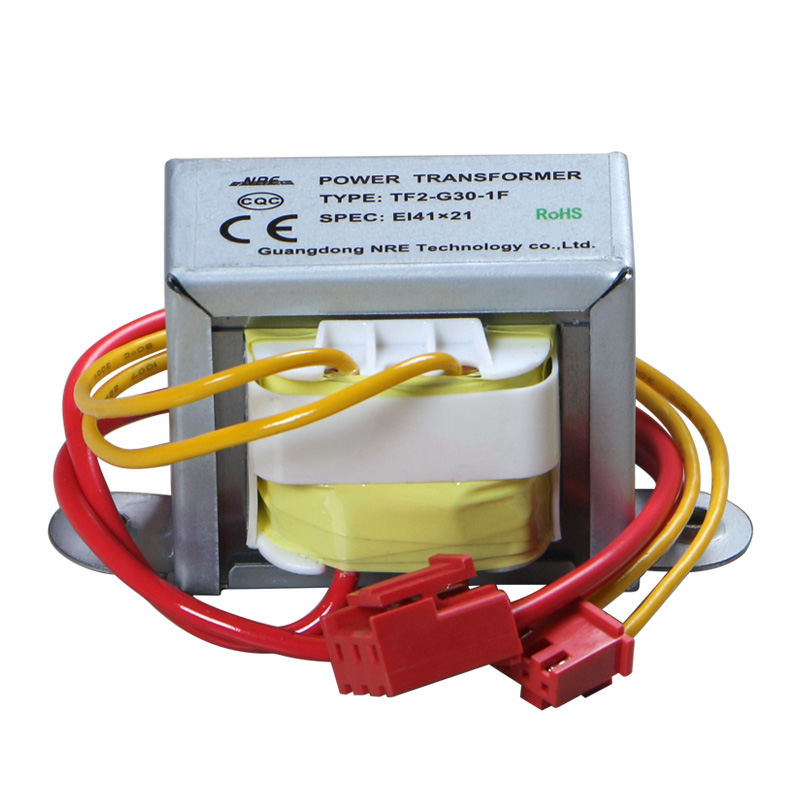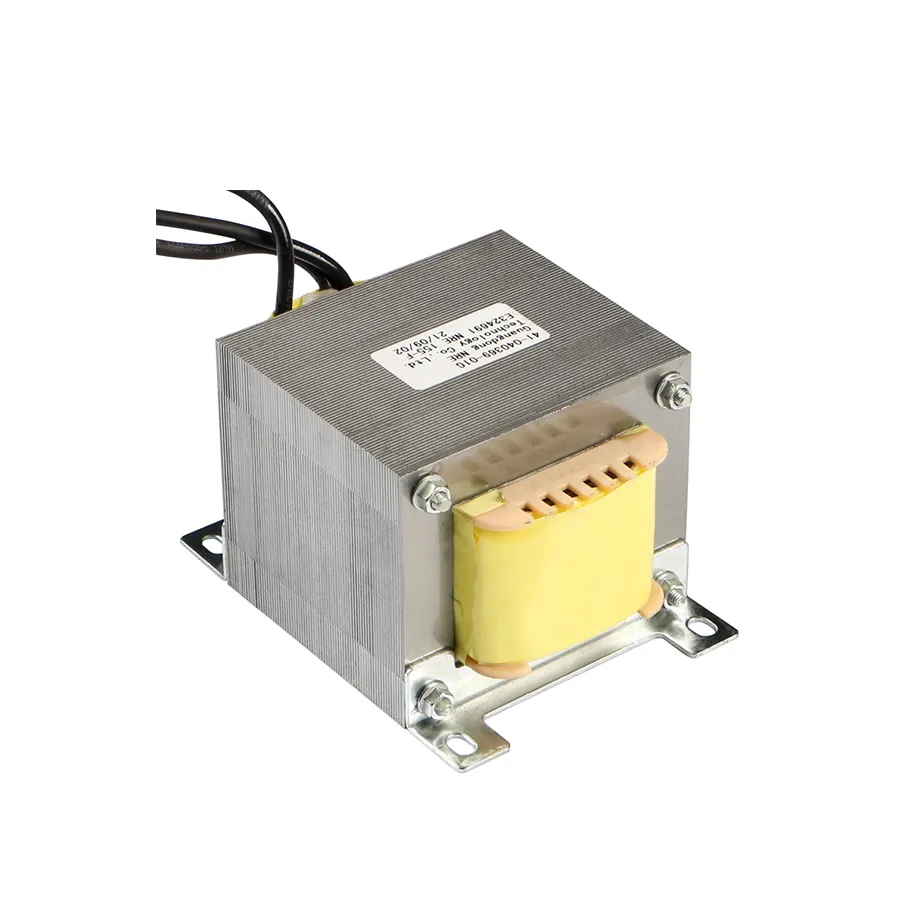

Audio Transformers: The Complete Guide to Impedance Matching, Isolation & Sound Quality
Dec 17,2025 | nretec
For audiophiles, sound engineers, and electronics designers, audio transformers are the unsung heroes of a pristine signal chain. Whether you're building a high-end tube amplifier, designing professional studio equipment, or restoring a vintage Hi-Fi system, understanding how audio transformers work is essential for achieving pure, distortion-free sound.
This comprehensive guide covers everything you need to know: their fundamental principles, the critical functions they perform (including impedance matching between input and output circuits), the key specifications to consider, and how to select the right transformer for your application.
What Is an Audio Transformer?
An audio transformer is a specialized type of transformer designed to operate within the audible frequency range (approximately 20 Hz to 20 kHz). Its primary purpose is to transfer audio signals from one circuit to another through magnetic induction, without a direct electrical connection.
Like all transformers, an audio transformer consists of:
- Primary Winding: The input coil that receives the audio signal.
- Secondary Winding: The output coil that delivers the transformed signal.
- Magnetic Core: Typically made from high-permeability materials like laminated silicon steel, nickel-iron alloys (e.g., Mu-metal), or amorphous alloys.
For a deeper understanding of transformer fundamentals, see this educational resource on audio transformer principles.
4 Critical Functions of Audio Transformers
1. Impedance Matching (Optimize Power Transfer)
Impedance mismatch is one of the biggest enemies of clean audio. When you connect a high-impedance source (e.g., a tube amplifier's output stage at several thousand ohms) to a low-impedance load (e.g., an 8Ω speaker), most of the signal energy is lost.
An audio transformer solves this by transforming impedance according to the square of its turns ratio:
ZP / ZS = (NP / NS)²Example: To match a 5000Ω tube output to an 8Ω speaker, you need an impedance ratio of 5000/8 = 625:1, which corresponds to a turns ratio of √625 = 25:1.
This is why every vacuum tube amplifier requires an output transformer—it bridges the high-impedance tube circuit to the low-impedance speaker.
2. Electrical Isolation (Eliminate Ground Loops & Hum)
Because there is no direct electrical connection between the input and output windings, audio transformers provide complete galvanic isolation. This is invaluable for:
- Eliminating Ground Loops: When connecting multiple pieces of gear, unwanted current can cause the infamous "60Hz hum." An isolation transformer breaks this loop.
- Safety: Prevents DC voltages from passing between circuits.
- Common-Mode Noise Rejection: Balanced transformers reject noise appearing equally on both conductors.
3. Voltage Transformation (Step-Up or Step-Down)
Audio transformers can increase or decrease signal voltage:
- Step-Up: Boosts weak signals (e.g., from low-output microphones).
- Step-Down: Reduces high-level signals for sensitive equipment.
4. DC Blocking (Protect Downstream Equipment)
Since transformers only pass AC signals, any DC offset present in the source is automatically blocked. This protects speakers from damaging DC current and allows coupling between amplifier stages with different DC operating points—essential for both tube and solid-state designs.
Types of Audio Transformers
By Position in Circuit
| Type | Application | Key Requirement |
|---|---|---|
| Input Transformer | Microphones, preamp inputs | High turns ratio (step-up), low noise floor |
| Interstage Transformer | Between amplifier stages | Balanced frequency response, low insertion loss |
| Output Transformer | Amplifier to speaker | Handles power, wide bandwidth under load |
| Line Matching Transformer | Balanced/unbalanced conversion | 600Ω impedance matching |
By Core Type
| Core Type | Characteristics | Best For |
|---|---|---|
| Laminated EI/EE | Cost-effective, good for higher power | General purpose, output stages |
| Toroidal | Low hum, low leakage flux, compact | Hi-Fi, recording studio, noise-sensitive applications |
| Nickel-Iron Alloy (Mu-metal, Permalloy) | Very high initial permeability (μi = 20,000-80,000), excellent shielding | High-end input transformers, mic preamps |
| Amorphous/Nanocrystalline | Superior frequency response, lowest hysteresis loss, Bsat ~1.2T | Ultra-high-fidelity audiophile equipment |
Advanced Design Note: Single-Ended vs. Push-Pull
For tube amplifier builders, the distinction is critical:
- Push-Pull Output Transformers: DC currents in the two primary halves cancel each other out. No air gap is strictly required, allowing for higher inductance and better bass response in a smaller core.
- Single-Ended Output Transformers: A continuous DC bias current flows through the primary. To prevent the magnetic core from saturating (which would destroy fidelity), an Air Gap must be precision-engineered into the core. This requires larger cores to achieve the same bass response compared to push-pull designs.
Key Audio Transformer Specifications
| Specification | Description | Why It Matters |
|---|---|---|
| Frequency Response | Range over which the transformer operates flat (e.g., 20Hz-20kHz ±1dB) | Ensures faithful bass and treble reproduction |
| Impedance Ratio | Primary:Secondary impedance (e.g., 600Ω:600Ω) | Must match source and load |
| Insertion Loss | Signal attenuation (<1dB for quality units; typically <0.5dB @ 1kHz) | Lower is better; test at reference frequency |
| Total Harmonic Distortion (THD) | Distortion introduced (<0.1% for Hi-Fi) | Critical for signal purity |
| Maximum Level (dBu) | Highest signal level before saturation | Important for line-level stages |
| DC Resistance (DCR) | Winding resistance | Lower is generally better |
| Shielding | Electrostatic or magnetic shielding | Reduces interference pickup |
For detailed sizing information, refer to our Audio Toroidal Transformer Dimensions Chart.
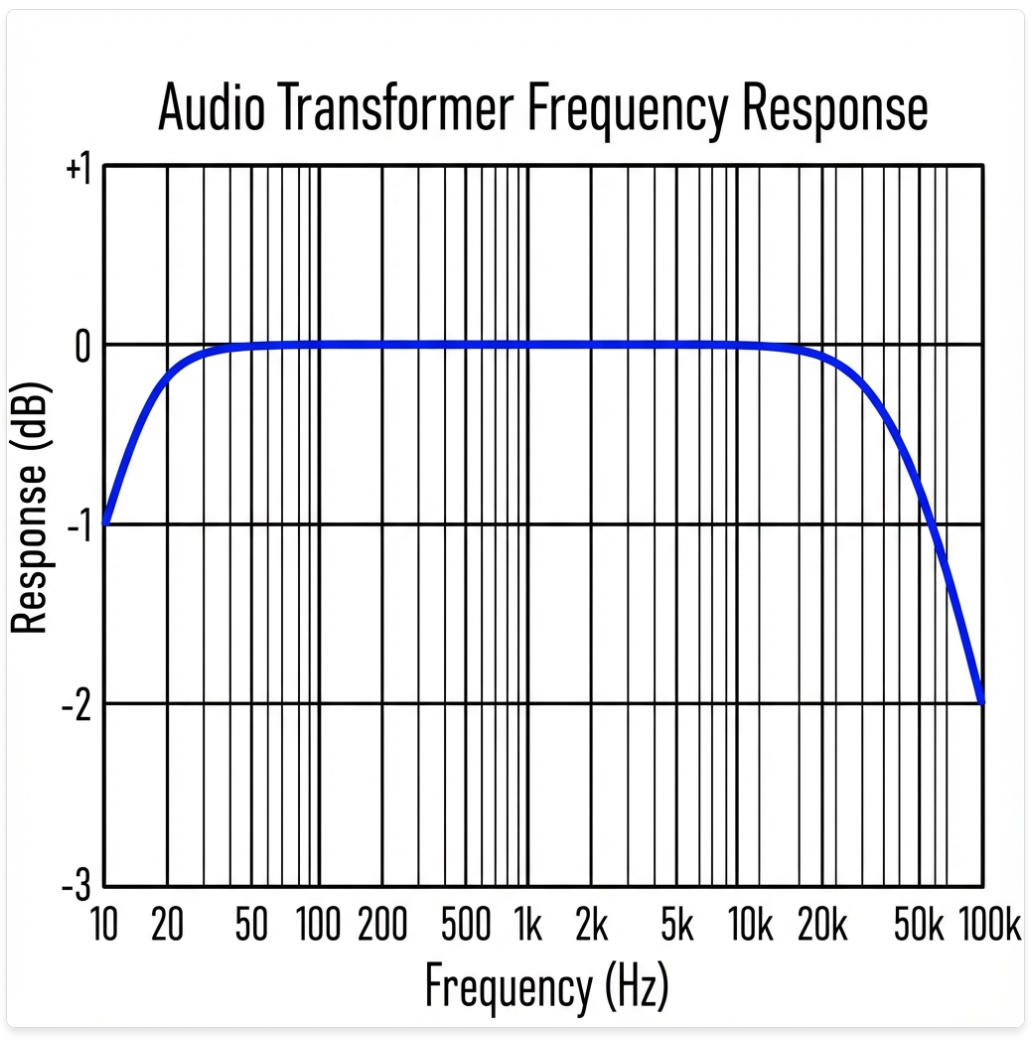
Figure 1: Ideal Audio Transformer Frequency Response (20Hz - 20kHz)
Common Applications of Audio Transformers
1. Vacuum Tube Amplifiers (Hi-Fi & Guitar Amps)
The output transformer is arguably the most critical component in a tube amp. It determines power efficiency, tonal character, and dynamic response. Classic designs like Fender, Marshall, and Vox rely on quality transformers for their signature sound.
📖 Full Transformer Guide for Tube Amplifiers
2. Professional Recording Studios
- Microphone Preamps: Input transformers boost low-level mic signals with isolation.
- DI Boxes: Line matching transformers convert high-Z instrument signals to balanced lines.
- Mixing Consoles: Input/output transformers for isolation and impedance matching.
3. Hi-Fi Audio Systems
Audiophile turntable phono stages and preamplifiers incorporate premium transformers for stepping up moving-coil cartridge signals and noise rejection.
📖 Enhancing Sound Quality with Toroidal Transformers
4. Musical Instruments & Pedals
- Guitar Amp Heads: Output transformers match tubes to speakers.
- ABY Splitters: Isolation transformers feed two amps without hum.
- Reamp Boxes: Convert line level back to instrument level.
5. Broadcast & Telecommunications
Voice coupling transformers for telephone systems and broadcast studios providing impedance matching and isolation.
Why Choose Toroidal Transformers for Audio?
| Advantage | Explanation |
|---|---|
| Ultra-Low Hum | Minimal air gap = reduced magnetostriction noise |
| Reduced EMI/RFI | Symmetrical windings contain magnetic fields |
| Compact & Lightweight | 30-50% size reduction for same power rating |
| Better Frequency Response | Lower leakage inductance improves high-frequency performance |
| Lower Noise Floor | Ideal for microphone preamps and phono stages |
Explore NRE's full range of toroidal transformers for amplifiers.
NRE Audio Transformer Specifications & Capabilities
NRE offers a wide range of audio-grade toroidal transformers suitable for power amplifier, preamplifier, and studio equipment applications. Below is our typical capability range:
| Parameter | Standard Range | Custom Capability |
|---|---|---|
| Power Rating | 30VA - 1000VA | Up to 5kVA on request |
| Frequency Response | 20Hz - 20kHz ±1dB | 10Hz - 50kHz for Hi-Fi |
| Primary Voltage | 115V, 230V, 100V/115V/230V multi-tap | Any voltage to 1000V |
| Efficiency | ≥95% | Up to 97% for custom designs |
| Noise Level | <50dB | <40dB for premium audio |
| Shielding | Standard electrostatic shield | Dual ESS + magnetic band |
🏆 Customer Success: Trusted by World-Leading Audio Brands
NRE is the trusted transformer supplier for world-renowned audio equipment manufacturers, including:
🔊 HiVi | 🎹 Yamaha | 💡 Philips | 🎵 Leading European Hi-Fi Brands
Partnership Duration: 20+ years of continuous collaboration
Applications: Premium Hi-Fi power amplifiers, professional audio equipment, home theater systems
Why They Choose NRE:
- Ultra-low noise (<50dB) for audiophile-grade performance
- Minimal magnetic leakage (1/10 of EI) – no interference with sensitive circuits
- Efficiency ≥95% for reduced heat and extended equipment lifespan
- Consistent quality across high-volume production runs
"Our 20+ year partnership with NRE speaks to their quality and reliability. Their toroidal transformers helped our amplifiers achieve pristine sound with noise control far exceeding expectations."
📅 Custom Transformer Development Timeline
| Phase | Duration | Deliverable |
|---|---|---|
| 1. Initial Consultation | 1-2 days | Requirements review, feasibility assessment |
| 2. Design & Quotation | 3-5 days | Electrical design, mechanical drawing, pricing |
| 3. Prototype Production | 7-10 days | No MOQ – Sample unit for testing |
| 4. Testing & Approval | Customer-driven | Frequency response, THD, noise measurements |
| 5. Mass Production | 3-4 weeks (typical) | Full order with 100% testing |
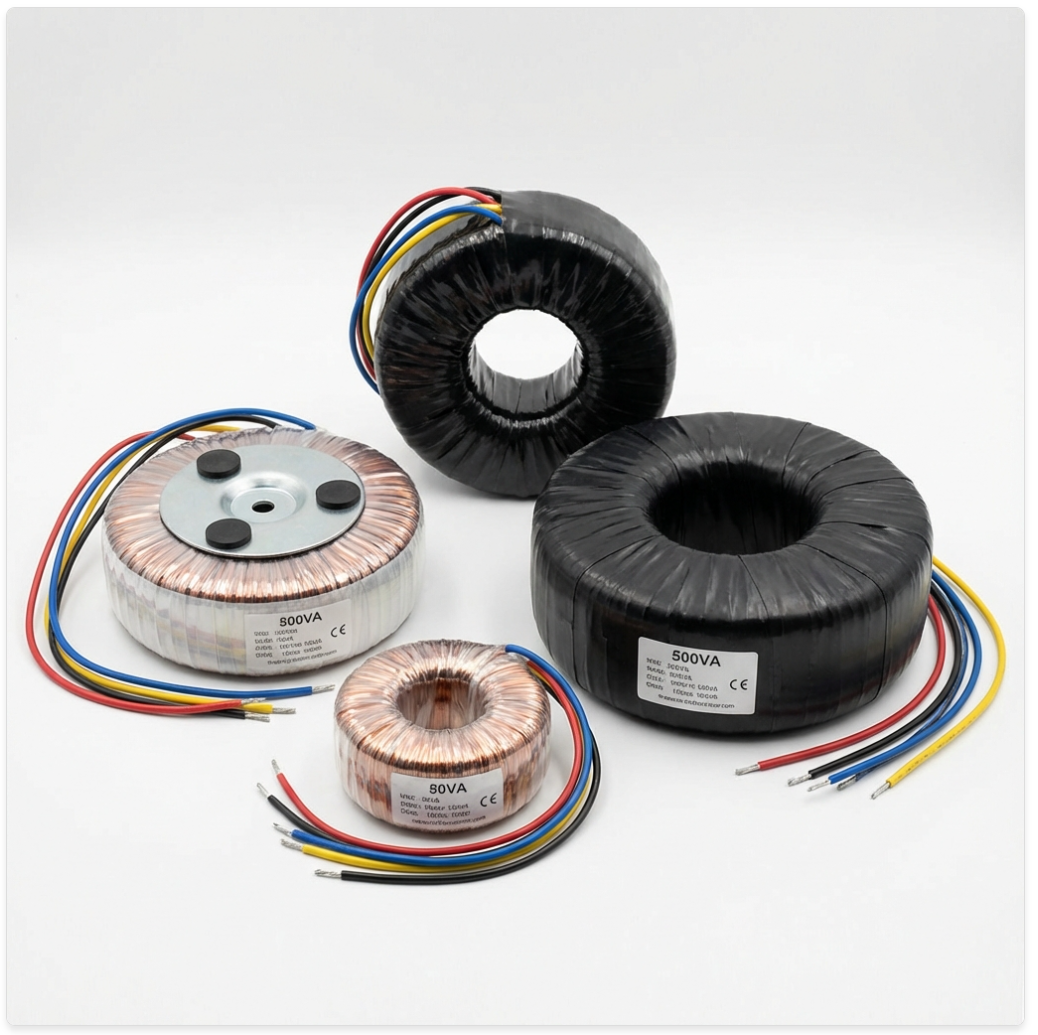
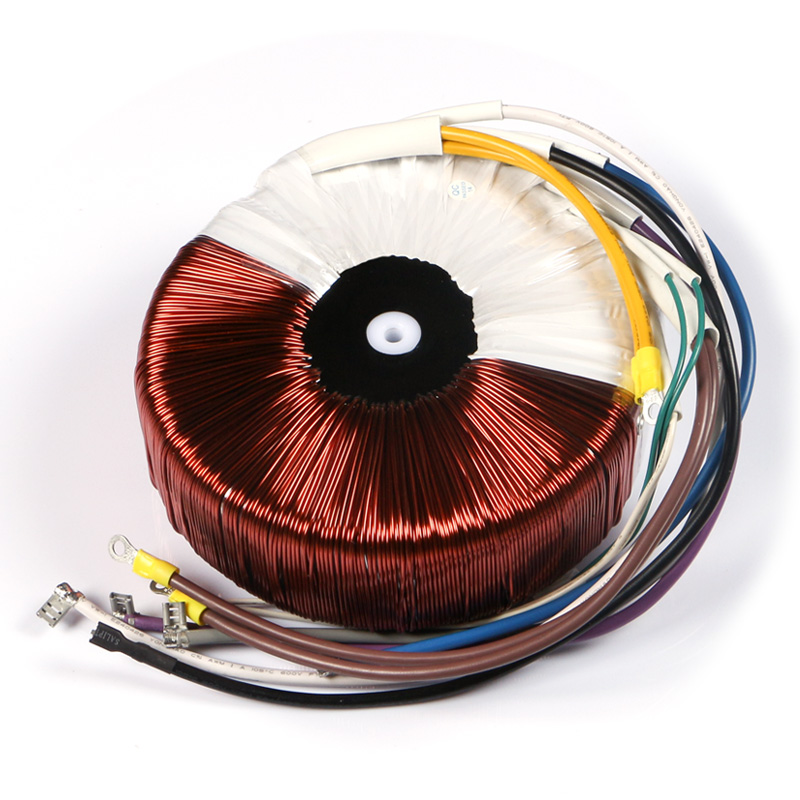
Figure 2: NRE Audio Toroidal Transformer Series (Standard & Custom Sizes)
Frequently Asked Questions (FAQ)
Why Partner with NRE for Audio Transformers?
- ✅ 30+ Years of Expertise – ISO 9001 Certified Manufacturing
- ✅ Custom Design Capability – Single-Ended (Air Gapped) & Push-Pull
- ✅ Toroidal Specialization – Industry-leading low-noise designs
- ✅ Ultra-Low Noise – Factory tested: <50dB hum level
- ✅ Global Compliance – RoHS Compliant Materials, UL Listed Insulation Systems (Class B/F/H)
- ✅ Safe Transport – Export-grade reinforced packaging to prevent shipping damage
- ✅ No MOQ for Prototypes – Ideal for boutique builders
Request a Custom Audio Transformer Quote »
Comment