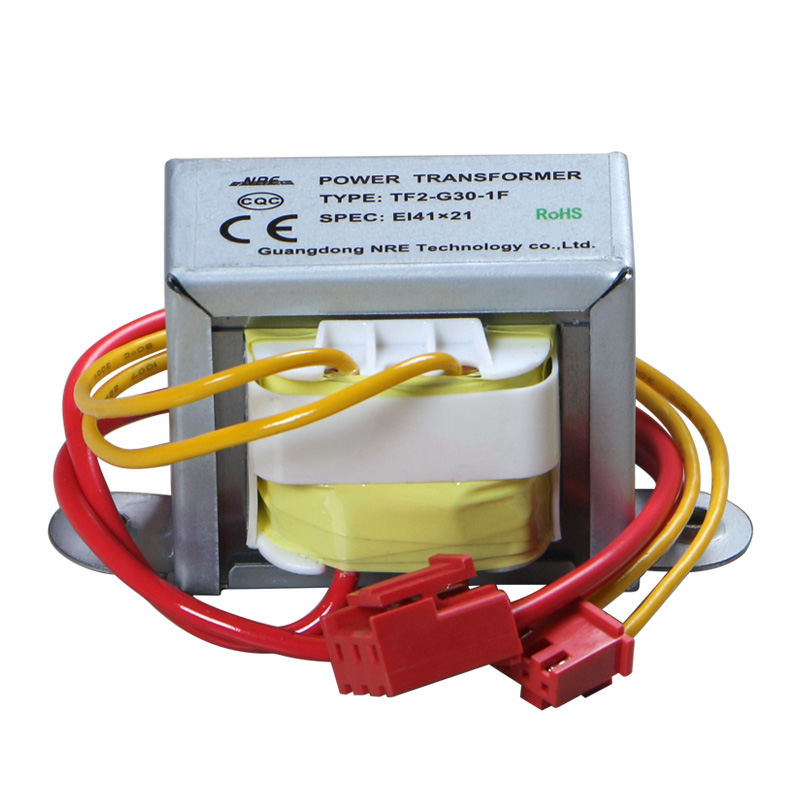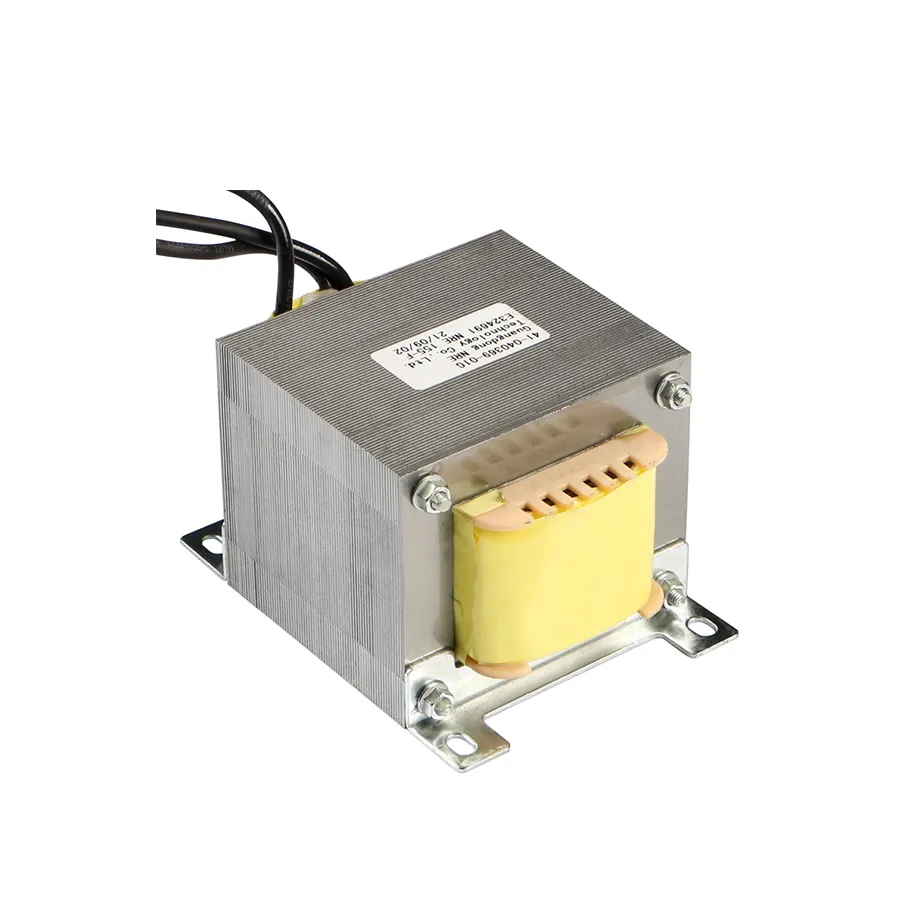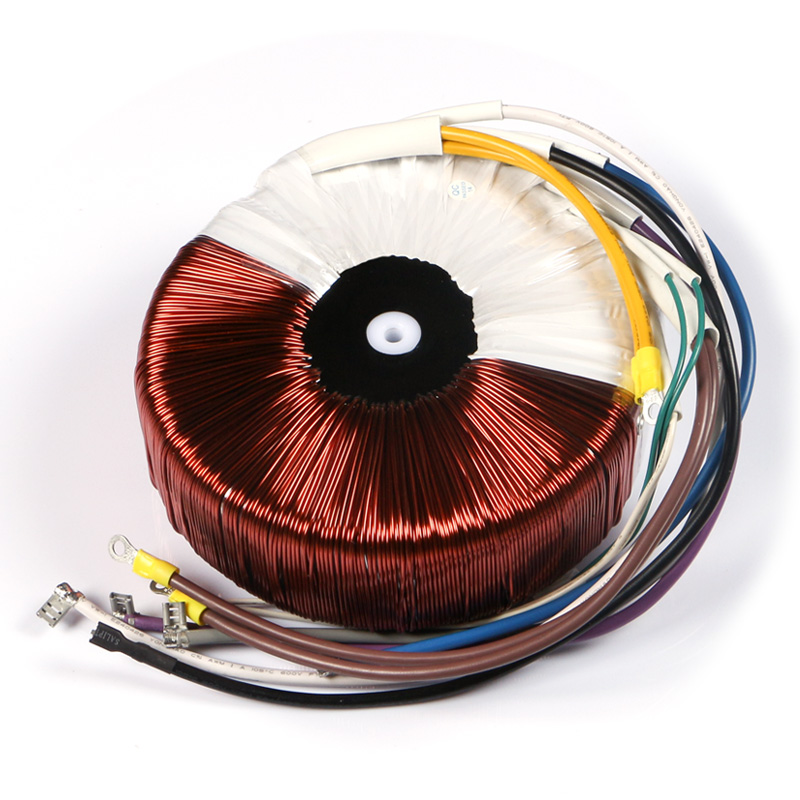

When electrical safety is non-negotiable—in hospitals, data centers, laboratories, and sensitive electronics—an isolation transformer is the unsung hero protecting both equipment and personnel. Unlike standard transformers, isolation transformers provide complete galvanic isolation between input and output circuits, eliminating the risk of electric shock and suppressing electrical noise that can damage sensitive devices.
This comprehensive guide covers everything you need to know about isolation transformers: how they work, the different types available, key specifications to consider, and how to select the right transformer for your application—from medical equipment to industrial automation.
📑 Table of Contents
What Is an Isolation Transformer?
An isolation transformer is an essential electrical component designed to transfer electrical power from an AC power source to a device while providing complete electrical isolation between the primary and secondary windings. Unlike autotransformers where windings are electrically connected, the windings of an isolation transformer are only magnetically coupled—there is no direct conductive path between input and output.
How Does It Work?
The operating principle is based on electromagnetic induction:
- AC power flows through the primary winding, creating a magnetic field in the core.
- This magnetic field induces a voltage in the secondary winding(s) proportionally to the turns ratio.
- Because the windings are physically separated, only magnetic energy transfers—no direct electrical connection exists.
Most isolation transformers have a 1:1 turns ratio, meaning input and output voltages are equal. However, step-up or step-down isolation transformers are also available when voltage transformation is required alongside isolation.
![]() The Role of the Faraday Shield
The Role of the Faraday Shield
 The Role of the Faraday Shield
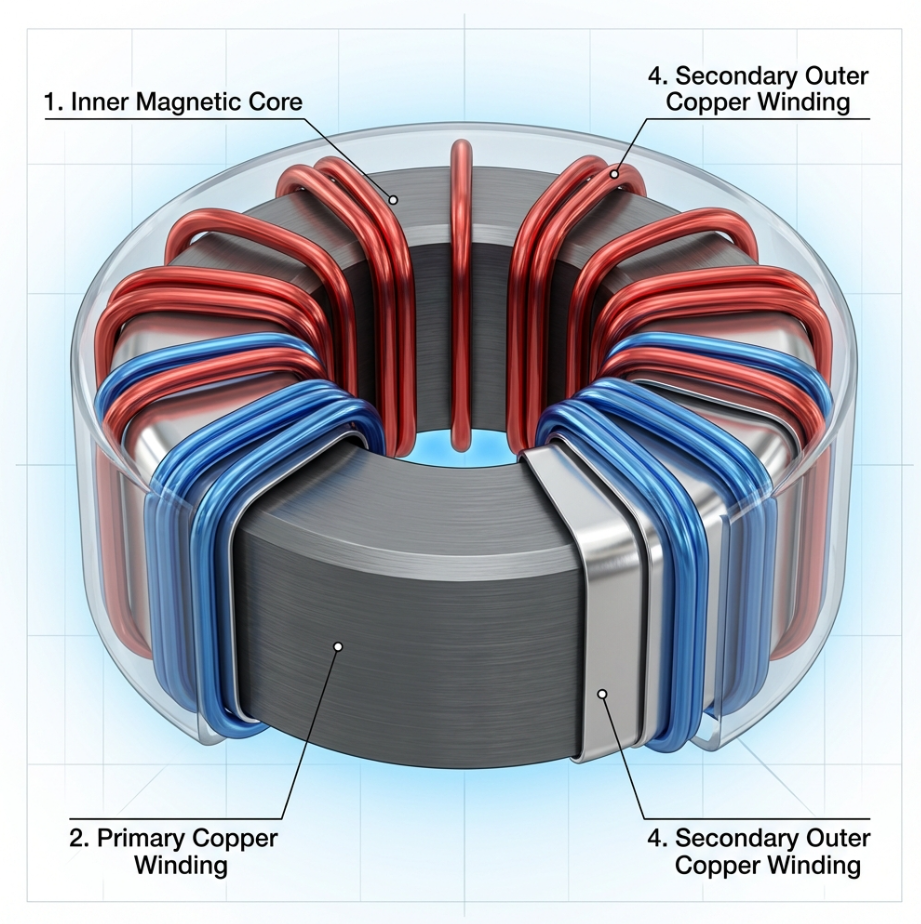
High-quality isolation transformers include an electrostatic shield (Faraday shield) between the primary and secondary windings. This grounded metal layer:
- Blocks capacitive coupling between windings
- Reduces common-mode electrical noise
- Provides superior protection for sensitive electronics
5 Critical Functions of Isolation Transformers
1. Electric Shock Protection
The primary purpose of an isolation transformer is safety. By separating the powered device from the power source, it prevents lethal current from flowing through personnel who accidentally contact live parts. This is why medical equipment in hospitals universally uses isolation transformers—patient safety is paramount.
2. Eliminate Ground Loops
When multiple pieces of equipment share a common ground, unwanted current can flow through ground connections, causing the infamous "60Hz hum" in audio systems or data errors in sensitive instruments. An isolation transformer breaks the ground loop, providing a clean, independent reference.
3. Suppress Electrical Noise & Transients
Voltage spikes from lightning, static electricity, or switching equipment can reach thousands of volts. The inductive properties of isolation transformer windings resist rapid current changes, attenuating transients before they reach connected equipment. This protects:
- Computers and servers
- Laboratory instruments
- CNC machines and PLCs
- Telecommunications equipment
4. Block DC Components
Isolation transformers only allow AC signals to pass—any DC component in the input is blocked. This protects downstream equipment and ensures proper operation of AC-powered devices.
5. Voltage Transformation (When Needed)
While most isolation transformers are 1:1, they can also step voltage up or down. This is useful for:
- International applications (e.g., 230V to 115V)
- Matching equipment voltage requirements
- Industrial power distribution
Types of Isolation Transformers
Different types of isolation transformers are designed for specific applications. Understanding the different types helps you select the optimal solution:
| Type | Key Characteristics | Best Applications |
|---|---|---|
| Standard 1:1 | Equal input/output voltage, basic isolation | General IT, office equipment |
| Step-Up / Step-Down | Voltage conversion + isolation | International voltage matching |
| Ultra Isolation | Multiple shields, ultra-low coupling capacitance | MRI, CT scanners, sensitive labs |
| Toroidal Isolation | Compact, low EMI, quiet operation | Audio/Hi-Fi, medical, data centers |
| Dry-Type (VPI/Cast Resin) | No oil, fire-resistant | Hospitals, schools, chemical plants |
| Drive Isolation | Handles VFD harmonics and transients | Motor drives, industrial automation |
| Medical-Grade (IEC 60601) | Ultra-low leakage current (<100µA) | Patient monitoring, life support |
Why Choose Toroidal Isolation Transformers?
Toroidal isolation transformers offer significant advantages over traditional laminated designs:
- 90% lower stray magnetic field — minimal interference with sensitive circuits
- 50% size/weight reduction — easier installation in space-constrained equipment
- Near-silent operation — noise <50dB, ideal for hospitals and studios
- Higher efficiency (≥95%) — reduced heat and energy costs
Isolation Transformer vs. Autotransformer
Many engineers wonder: Why not just use an autotransformer? It's smaller and cheaper.
The answer lies in safety and noise performance:
| Feature | Isolation Transformer | Autotransformer |
|---|---|---|
| Galvanic Isolation | ✅ Yes | ❌ No |
| Electric Shock Protection | ✅ High | ⚠️ Low |
| Ground Loop Elimination | ✅ Yes | ❌ No |
| Noise/Transient Rejection | ✅ Excellent | ⚠️ Poor |
| Size & Weight | Larger | Smaller |
| Cost | Higher | Lower |
| Best For | Safety-critical, sensitive equipment | Voltage adjustment only |
For a detailed comparison, see our guide: Isolation Transformer vs Autotransformer: Ultimate Pro's Guide
Key Specifications to Consider
When specifying an isolation transformer, evaluate these critical parameters:
| Specification | Description | Why It Matters |
|---|---|---|
| Power Rating (VA/kVA) | Maximum load capacity | Must exceed total connected load |
| Input/Output Voltage | Primary and secondary voltages | Match your application exactly |
| Isolation Voltage (Hi-Pot) | Dielectric withstand rating (e.g., 4kV) | Required for safety certifications |
| Leakage Current | <500µA typical, <100µA medical | Critical for patient safety |
| Frequency | 50Hz or 60Hz (or both) | Must match regional power grid |
| Efficiency | ≥95% for quality units | Reduces heat and operating costs |
| Shielding | Electrostatic (Faraday) shield | Essential for noise suppression |
| Insulation Class | B (130°C), F (155°C), H (180°C) | Determines temperature rating |
| Compliance | CE, UL, IEC 60601 (medical) | Regulatory requirements |
Technical Note: Leakage Current for Medical Applications
For medical devices in contact with patients, leakage current must be extremely low to prevent micro-shock hazards:
- General industrial: <500µA acceptable
- Medical-grade (IEC 60601): <100µA required
- Body-floating applications (BF): <10µA for direct cardiac connection
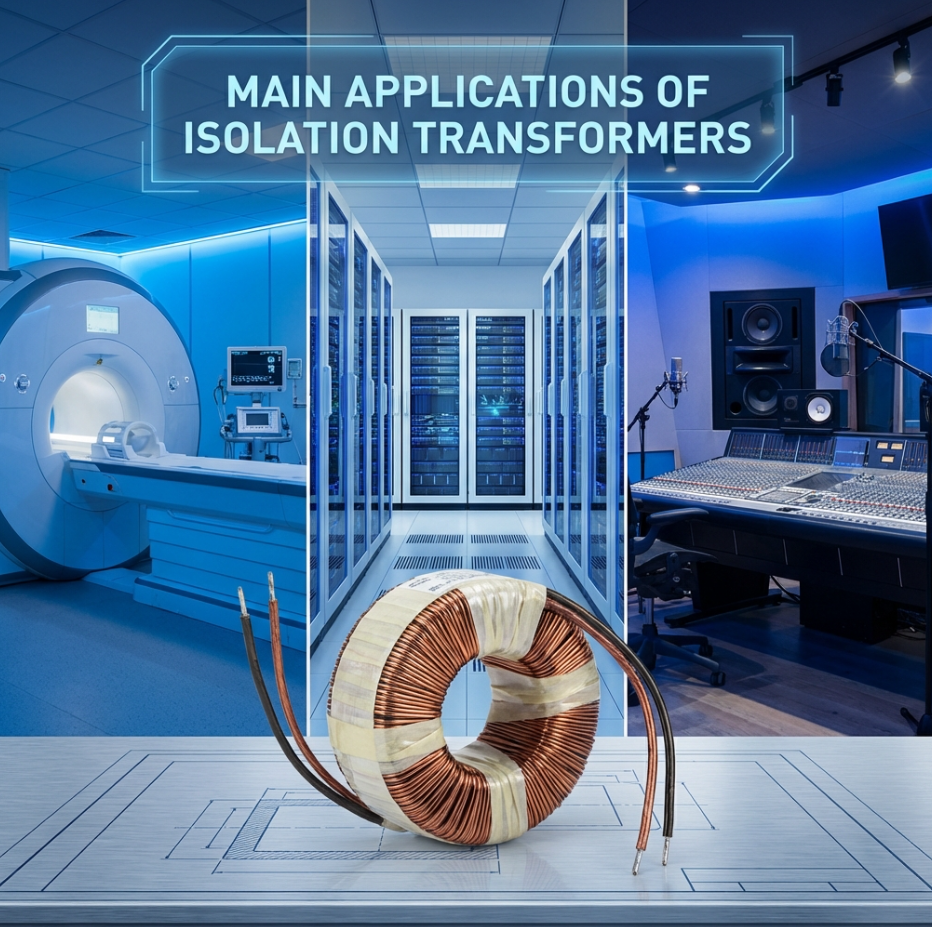
Top 6 Applications of Isolation Transformers
![]() 1. Medical Equipment
1. Medical Equipment
 1. Medical Equipment
Isolation transformers are mandatory in healthcare settings to protect patients and staff from electric shock:
- MRI and CT scanners
- Patient monitoring systems
- Ventilators and life-support
- Surgical equipment (electrocautery)
- Infusion pumps
Learn more: What is a Medical-Grade Transformer? | Enhancing Medical Device Performance
2. Data Centers & IT Infrastructure
Critical computing infrastructure relies on isolation transformers to:
- Protect servers from power surges
- Eliminate ground loops between racks
- Provide clean power for UPS systems
Related: Efficient UPS Toroidal Transformers
3. Laboratory & Testing Equipment
Precision instruments like oscilloscopes, spectrum analyzers, and calibration equipment require isolated power supplies to ensure accurate measurements free from noise interference.
4. Telecommunications
Broadcasting studios, telephone exchanges, and network equipment benefit from isolation transformers to prevent ground-loop hum and protect against lightning-induced surges.
5. Audio & Video Equipment
High-fidelity audio systems and professional recording studios use isolation transformers to eliminate power-line noise and achieve pristine sound quality.
Related: Is Toroidal Transformer Better for Audio?
6. Industrial Automation
CNC machines, PLCs, VFDs, and robotic systems require stable, noise-free power to prevent erratic operation and data corruption.
Related: Revolutionizing Industrial Control with Toroidal Transformers
Shore-to-ship isolation transformers prevent galvanic corrosion of boat hulls by electrically isolating the vessel's electrical system from the marina's shore power.
NRE Isolation Transformer Capabilities
NRE offers a comprehensive range of high quality isolation transformers suitable for medical, industrial, and sensitive electronics applications:
Standard Capabilities
| Parameter | Standard Range | Custom Capability |
|---|---|---|
| Power Rating | 10VA – 1000kVA | Up to 1000kVA+ on request |
| Voltage | 100V – 480V (multi-tap available) | Any voltage to 1000V |
| Frequency | 50Hz, 60Hz, or dual-frequency | Custom frequencies available |
| Efficiency | ≥95% | Up to 97% for custom designs |
| Noise Level | <50dB | <40dB for premium applications |
| Leakage Current | <500µA standard | <100µA for medical-grade |
| Shielding | Standard electrostatic shield | Dual ESS + magnetic band |
| Compliance | CE, RoHS | UL, IEC 60601 (medical) available |
Why Partner with NRE?
- ✅ 30+ Years of Expertise — ISO 9001 Certified Manufacturing
- ✅ Toroidal & EI Options — Choose the optimal form factor
- ✅ Medical-Grade Available — IEC 60601 compliant, ultra-low leakage
- ✅ Global Compliance — CE, UL, RoHS certified materials
- ✅ Custom Design Capability — From prototype to mass production
- ✅ No MOQ for Prototypes — Ideal for R&D and testing
- ✅ Export-Grade Packaging — Safe delivery worldwide
🏆 Trusted by World-Leading Brands
NRE is the trusted isolation transformer supplier for global leaders in UPS, medical equipment, and industrial automation:
🔋 Schneider Electric | ⚡ EATON | 🏥 Philips | 🏥 GE Healthcare | 🏭 Panasonic
📊 Case Study: Data Center UPS Project
| Client: | Global UPS System Manufacturer (supplying Tier-1 data centers) |
| Challenge: | Existing EI-core transformers caused excessive noise (>65dB), heat buildup, and occupied too much rack space |
| Solution: | Custom toroidal isolation transformers with electrostatic shielding |
| Annual Volume: | 10,000+ units |
Results Achieved:
- ≥95% efficiency — reduced energy losses and cooling requirements
- <50dB noise — met stringent data center acoustic requirements
- 30-50% size reduction — enabled higher rack density
- Electrostatic shielding — eliminated ground loop issues affecting sensitive servers
"NRE's toroidal isolation transformers solved our noise and space challenges. The combination of high efficiency, low EMI, and compact design was exactly what our data center customers demanded. We've been partners for over 15 years."
📅 Custom Project Timeline
| Phase | Duration | Deliverable |
|---|---|---|
| 1. Initial Consultation | 1-2 days | Requirements review |
| 2. Design & Quotation | 3-5 days | Electrical design, pricing |
| 3. Prototype Production | 7-10 days | Sample unit (No MOQ) |
| 4. Testing & Approval | Customer-driven | Hi-pot, efficiency, leakage tests |
| 5. Mass Production | 3-4 weeks (typical) | 100% tested units |
How to Choose an Isolation Transformer
Follow these 5 key considerations to select the right isolation transformer for your application:
1. Voltage Requirements
- What is your input voltage (mains power)?
- What output voltage(s) do you need?
- Do you need single-phase or three-phase?
2. Load Type & Size
- Calculate total VA/kVA of connected equipment
- Consider inrush current for motors and capacitive loads
- Account for future expansion
3. Safety Standards
- General industrial: CE, UL certification sufficient
- Medical applications: IEC 60601 mandatory, specify required leakage current class
- Hazardous environments: ATEX or other regional certifications
4. Environmental Conditions
- Indoor or outdoor installation?
- Ambient temperature range?
- Humidity, dust, or chemical exposure?
5. Noise & Shielding Requirements
- Standard isolation: Basic electrostatic shield
- Sensitive equipment: Dual ESS + magnetic shielding
- Ultra-quiet: Toroidal design recommended
Frequently Asked Questions
- Electric shock protection for personnel and patients
- Ground loop elimination in audio and measurement systems
- Electrical noise suppression for sensitive electronics
- DC blocking to protect AC-powered devices
- Voltage transformation (step-up or step-down)
- Enhanced insulation between primary and secondary windings
- Electrostatic (Faraday) shield to block capacitive coupling
- Higher dielectric withstand capability
- Typically 1:1 turns ratio (equal input/output voltage)
- Leakage current <100µA (or <10µA for patient-applied parts)
- Enhanced creepage and clearance distances
- Specific temperature rise limits
- Inductive impedance: Resists fast-changing voltage spikes
- Faraday shield: Blocks capacitive-coupled common-mode noise
- Ground loop breaking: Eliminates noise caused by ground potential differences
- Non-standard voltages and power ratings
- Multiple secondary outputs
- Special shielding configurations
- Medical-grade certifications (IEC 60601)
- Specific mounting and termination requirements
Ready to Specify Your Isolation Transformer?
Whether you need a standard isolation transformer for industrial use or a custom medical-grade solution, NRE has the expertise and manufacturing capability to deliver.
- ✅ 30+ years of transformer expertise
- ✅ ISO 9001 certified quality
- ✅ Toroidal and EI options
- ✅ Medical-grade (IEC 60601) available
- ✅ No MOQ for prototypes
- ✅ Global shipping with export-grade packaging
Request a Custom Isolation Transformer Quote »